Drilling methods play a crucial role in mineral exploration, as they determine the quality of data collected, project efficiency, and overall cost. Selecting the right technique depends on factors such as geological conditions, project objectives, depth requirements, and budget.
Among the most widely used methods in mineral exploration are Wireline Coring, Reverse Circulation (RC), and Rotary Air Blast (RAB) drilling. Each method serves a specific purpose and offers unique advantages.
1. Wireline Coring
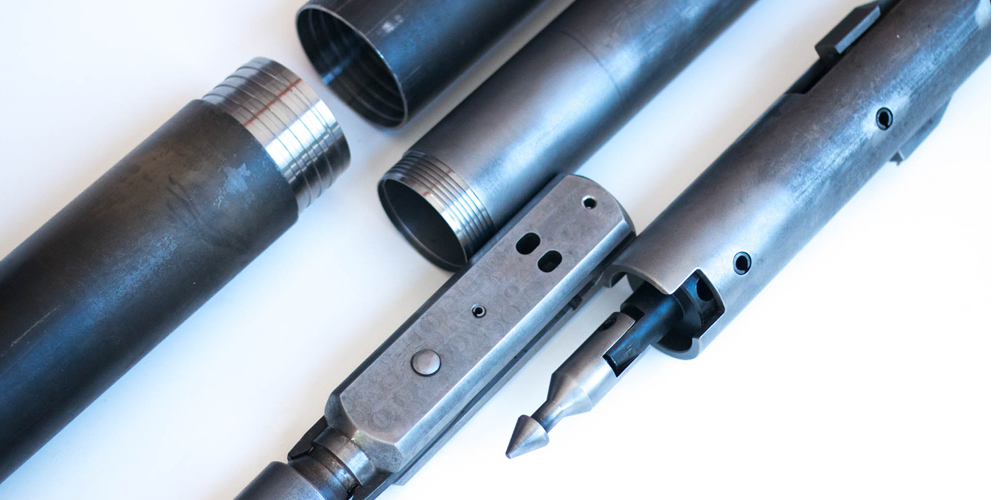
Wireline coring is a highly precise drilling method used to extract continuous cylindrical rock samples, known as core samples, from beneath the earth’s surface.
Key Features
- Provides detailed geological information
- Delivers intact core samples for analysis
- Suitable for deep and high-accuracy exploration
Advantages
- High-quality data for resource estimation
- Ideal for complex geological formations
- Supports advanced geological interpretation
Limitations
- Slower compared to other methods
- Higher operational cost
👉 Best used for: Detailed exploration and resource definition.
2. Reverse Circulation (RC) Drilling
Reverse Circulation drilling uses compressed air to force rock cuttings to the surface through an inner tube, allowing for fast and efficient sample collection.
Key Features
- Produces rock chips instead of core samples
- Faster than wireline coring
- Suitable for medium to deep drilling
Advantages
- Cost-effective for large exploration programs
- Faster sample turnaround
- Reliable and consistent sampling
Limitations
- Less detailed than core samples
- Limited geological interpretation compared to coring
👉 Best used for: Resource evaluation and large-scale exploration.
3. Rotary Air Blast (RAB) Drilling
Rotary Air Blast drilling is a quick and cost-effective method commonly used in the early stages of mineral exploration.
Key Features
- Uses high-velocity air to clear cuttings
- Produces less detailed samples
- Suitable for shallow drilling
Advantages
- Low cost and fast execution
- Ideal for preliminary exploration
- Covers large areas quickly
Limitations
- Lower sample quality
- Not suitable for deep or detailed analysis
👉 Best used for: Initial exploration and target identification.
Choosing the Right Drilling Method
Selecting the appropriate drilling method depends on:
- Exploration stage (early vs advanced)
- Required data accuracy
- Geological conditions
- Budget and timeline
In many projects, a combination of methods is used to balance cost, speed, and data quality.
Ampdrill Africa’s Expertise
Ampdrill Africa offers flexible drilling solutions tailored to project requirements. Its rigs can be configured for wireline coring, reverse circulation, rotary air blast, and open-hole drilling, ensuring clients receive the most suitable method for their exploration goals.
With modern equipment, experienced personnel, and a commitment to operational excellence, Ampdrill Africa delivers efficient and reliable drilling services across diverse environments.
Conclusion
Understanding the differences between drilling methods is essential for successful mineral exploration. Wireline coring, reverse circulation, and RAB each play a unique role in the exploration process, from early-stage surveying to detailed resource evaluation.
By selecting the right approach and working with experienced drilling partners, companies can maximize efficiency, reduce costs, and achieve accurate exploration results.